

Ripped jeans have a way of showing up at the worst possible moment. One day your favorite pair fits like a dream, and the next there is a gaping hole across the knee or a worn patch near the pocket.
The good news is that you do not need to toss them out or pay for pricey repairs.
Learning how to sew a hole in jeans is one of the most useful skills you can pick up, and it works for every skill level.
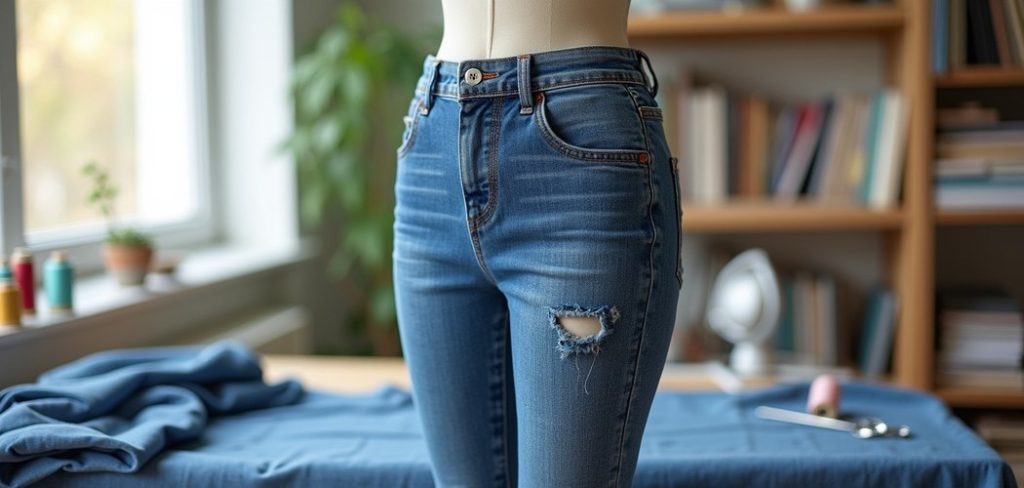
In this guide, you will find a clear, step-by-step approach that turns a frustrating tear into a quick fix.
We will walk through the tools you need, the techniques that hold up over time, and the little tricks that make your repair almost invisible.
Whether you are patching denim for the first time or brushing up on old habits, this friendly walkthrough gives you the confidence to grab a needle and get started.
Your jeans deserve a second life, and you are just a few stitches away from giving it to them.
Why Sewing A Hole In Jeans Matters
Fixing your own denim saves money, reduces waste, and keeps clothes you love in rotation for years.
Every pair of jeans you repair is one less item heading to a landfill, which makes this a small but meaningful win for the planet. There is also the personal payoff.
When you patch a tear yourself, you get a real sense of accomplishment and full control over how the finished result looks.
Beyond the practical benefits, mending denim builds a handy skill you can use again and again. Once you master the basic method, you can tackle jackets, bags, and other tough fabrics with ease.
It is an accessible, budget-friendly habit that pays off every time a new hole appears, and it puts the power to fix things right in your hands.
Step-by-Step Guide To How To Sew A Hole In Jeans
Step 1: Gather Your Tools And Supplies
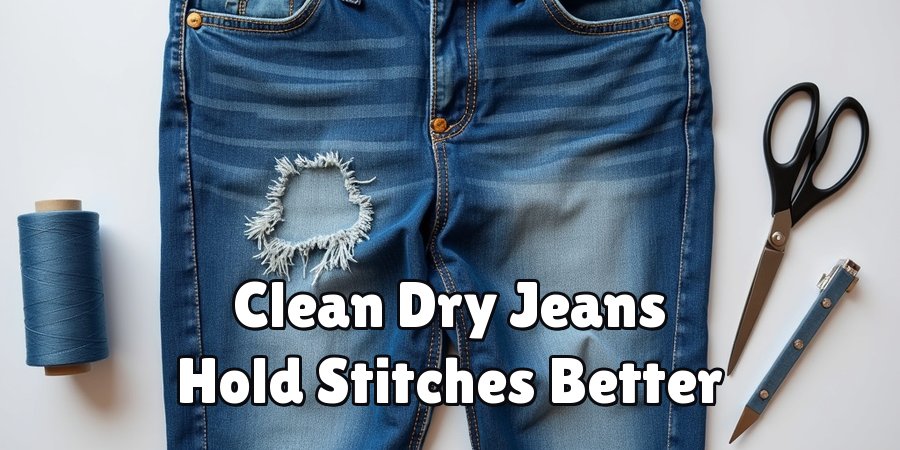
Before you start, set out everything you will need so the process runs smoothly. Grab a needle, strong thread that matches your denim, sharp scissors, and a few pins. A denim patch or a scrap of similar fabric works well for larger tears, and an iron helps flatten seams as you go.
If you have a sewing machine, keep it nearby, though hand stitching works just fine for smaller repairs. Having your supplies ready in one spot means you will not lose momentum halfway through.
Take a moment to check that your thread color blends in, since a close match keeps the finished repair looking clean and natural.
Step 2: Clean And Prepare The Damaged Area
Start with clean, dry jeans, because dirt and oils can weaken your stitches over time. Turn the jeans inside out and lay the damaged section flat on a table.
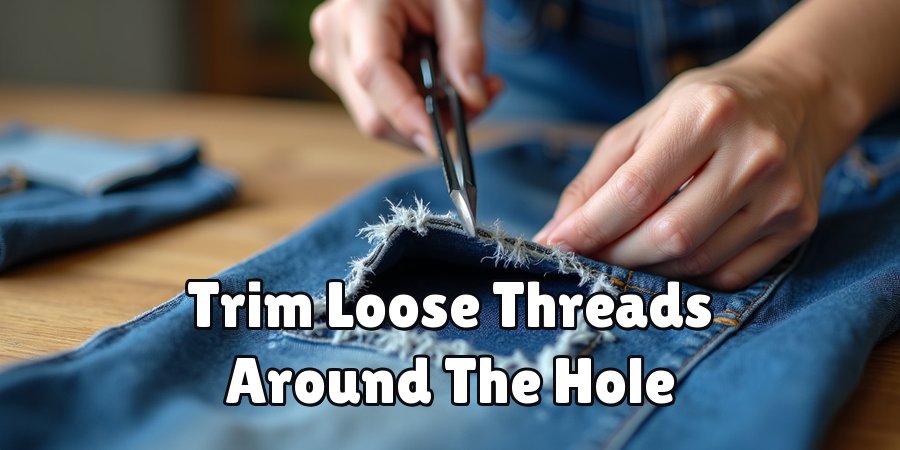
Trim away any loose or frayed threads around the edge of the hole with your scissors, but be gentle so you do not make the tear bigger.
If the fabric around the hole feels thin or stretched, smooth it out with your fingers. A tidy, flat surface gives you a stable base to work on. This small bit of prep makes a big difference, since a well-prepared area holds stitches better and helps the whole repair last far longer.
Step 3: Cut And Position A Backing Patch
For anything bigger than a tiny tear, a backing patch adds real strength. Cut a piece of denim or sturdy fabric slightly larger than the hole, leaving about half an inch of extra material on every side. Place this patch on the inside of the jeans so it sits directly behind the damaged spot.
Pin it firmly in place so it does not shift while you work. The patch acts like a foundation, giving your stitches something solid to grab onto.
If you want the repair to blend in, choose a patch color close to your jeans. This backing step is the secret to a fix that survives many washes.
Step 4: Learn Hole In Jeans With A Straight Stitch
Now the real work begins. Thread your needle, tie a knot at the end, and start stitching from the inside so the knot stays hidden. Work in small, even straight stitches that move back and forth across the hole, catching both the patch and the surrounding denim.
Keep your tension steady, since stitches that are too tight can pucker the fabric and stitches that are too loose will not hold. Take your time and let each pass overlap slightly with the last.
This crisscross pattern locks the fabric together and creates a strong, flexible surface that moves naturally with you when you wear them.
Step 5: Reinforce The Edges For Extra Strength
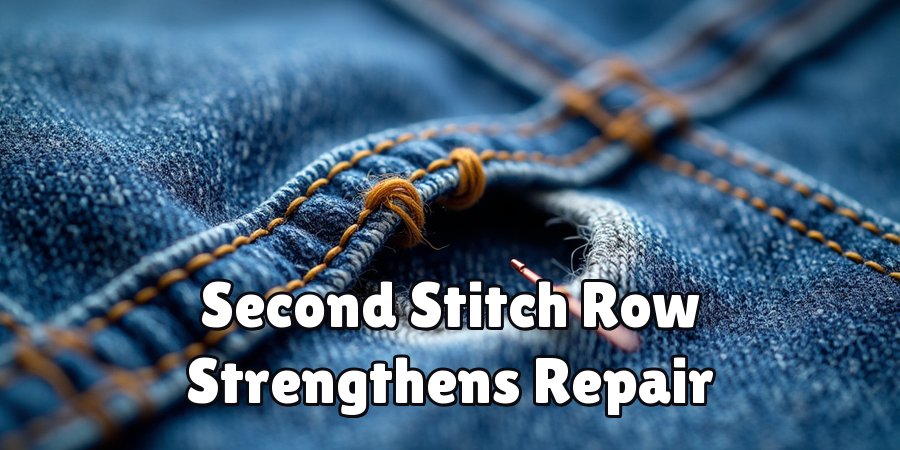
The edges of any repair take the most stress, so give them a little extra attention. Go back over the border where the hole meets the healthy denim and add a second row of stitches.
This double layer stops the tear from reopening the next time you bend, sit, or move. Pay close attention to corners and high-friction spots, as these areas wear out fastest.
If you are using a sewing machine, a zigzag stitch around the perimeter adds even more durability.
Reinforcing the edges takes only a few extra minutes, yet it dramatically increases how long your fix will last through daily wear and regular washing.
Step 6: Master The Finishing Touches When You Sew
With the main stitching done, it is time to tidy everything up. Turn the jeans right side out and check your work in good light. Trim any loose thread ends close to the fabric so nothing dangles.
Press the repaired area gently with a warm iron to flatten the stitches and help the patch settle into place. If you notice any gaps, add a few extra stitches to close them.
These finishing touches transform a rough patch into a neat, professional-looking result. A quick press and trim make the difference between a fix that shouts and one that quietly blends into your jeans.
Step 7: Test, Wash, And Care For Your Repair
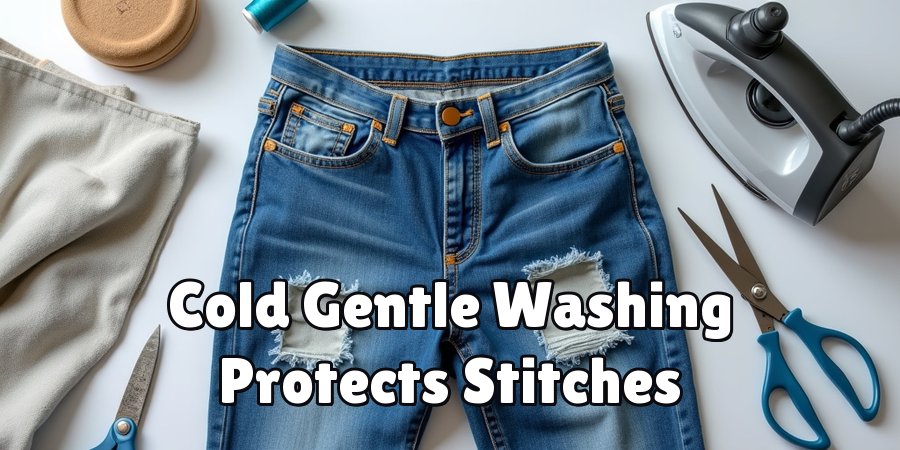
Before you call the job done, give the repair a gentle tug to make sure it holds. Wear the jeans for a bit to check the comfort and flexibility around the patched area. When it is time to wash, turn the jeans inside out and use a cold, gentle cycle to protect your stitches.
Air drying is kinder to the fabric than high heat, which can loosen threads over time. Caring for your repair the right way keeps it strong for months and even years. With a little attention, your mended jeans will feel just as reliable as they did before the hole appeared.
Frequently Asked Questions
Can I Fix A Hole In Jeans Without A Sewing Machine?
Absolutely. Hand stitching works well for most tears and gives you full control over each stitch. Use a strong needle, matching thread, and a backing patch for larger holes.
While a machine speeds things up, many people prefer hand sewing for small repairs.
It takes a little more time, but the results are just as durable when you keep your stitches small, even, and close together.
What Kind Of Thread Works Best For Denim?
Heavy-duty polyester or cotton thread is your best choice for denim, since it holds up against the stress and movement jeans face daily.
Look for a thread that closely matches your fabric color so the repair blends in. Some crafters use topstitching thread for a bolder, contrast look.
Whichever you pick, make sure it is strong, because thin or weak thread will break and force you to redo the whole repair.
How Do I Make The Repair Nearly Invisible?
The secret is matching your materials and working from the inside. Choose thread and a backing patch that closely match your denim color and weight.
Keep your stitches small and neat, and place most of your work behind the fabric. Pressing the area with an iron afterward helps everything blend.
With patience and a close color match, your repair can become almost impossible to spot at a glance.
How Long Will A Sewn Repair Last?
A well-done repair can last for years with proper care. The key factors are strong thread, a solid backing patch, and reinforced edges that handle stress.
How you wash and dry the jeans also matters, since gentle cycles and air drying protect your stitches.
If you notice any loosening over time, a few quick touch-up stitches will restore the strength and keep your jeans going strong.
Is It Worth Repairing Old Or Worn Jeans?
In most cases, yes. Repairing extends the life of jeans you already love and saves you money on replacements. It also reduces waste, which is a nice bonus for the environment.
If the denim is extremely thin across a wide area, a patch might not hold as well, but a single tear or hole is almost always worth fixing with a little time and effort.
Conclusion
Bringing your favorite denim back to life is far easier than it looks, and now you have everything you need to do it well.
From gathering your tools and prepping the fabric to reinforcing the edges and caring for the finished result, each step builds toward a repair that lasts.
Knowing how to sew a hole in jeans gives you the freedom to save money, cut down on waste, and keep the clothes you love in your closet for years to come.
The best part is that this skill grows with practice. Your first repair might take a little patience, but each one gets faster and cleaner as your confidence builds.
So the next time a tear shows up, do not reach for the trash bin. Grab your needle, follow these steps, and give your jeans the second life they deserve.
You have got this, and your wardrobe will thank you.

About
Bennie Wilder is a dedicated figure in the world of sewing, clothing repair, and garment care, with years of hands-on experience exploring practical techniques for making, repairing, and maintaining everyday clothing. His professional focus lies in combining traditional sewing craftsmanship with modern, easy-to-follow solutions, helping readers confidently handle common clothing problems at home. As an author at SewFixes, Bennie shares practical knowledge on sewing techniques, garment alterations, fabric care, clothing repairs, and DIY projects for beginners and experienced sewing enthusiasts alike.
Education
Fashion Institute of Technology (New York, USA)
Associate Degree in Fashion Design & Apparel Studies
- Focused on garment construction, sewing techniques, fabric fundamentals, and clothing alterations.
- Developed practical skills in pattern making, hand stitching, machine sewing, and garment finishing.
- Gained hands-on experience working with different fabrics, sewing tools, and apparel construction methods.
Academy of Art University (San Francisco, USA)
Bachelor’s in Fashion Design
- Specialized in apparel construction, textile selection, garment fitting, and contemporary clothing design.
- Studied the relationship between fabric properties, garment structure, durability, and comfort.
- Participated in practical design projects involving garment creation, alterations, repairs, and sustainable clothing practices.
Publications and Impact
Through SewFixes, Bennie shares practical insights into sewing, clothing repair, fabric care, garment alterations, and everyday DIY solutions. His writing focuses on turning complicated sewing tasks into simple, understandable steps that readers can follow at home.
Bennie covers everything from repairing torn seams and replacing buttons to fixing hems, adjusting garment fit, choosing suitable fabrics, and maintaining sewing machines and tools. His content is designed to help readers become more confident with their clothing while encouraging practical repair and reuse instead of unnecessary replacement.
Through his work, Bennie aims to bridge the gap between traditional sewing knowledge and modern everyday needs—making sewing more approachable, useful, and accessible to anyone who wants to repair better, sew smarter, and make their clothes last longer.